
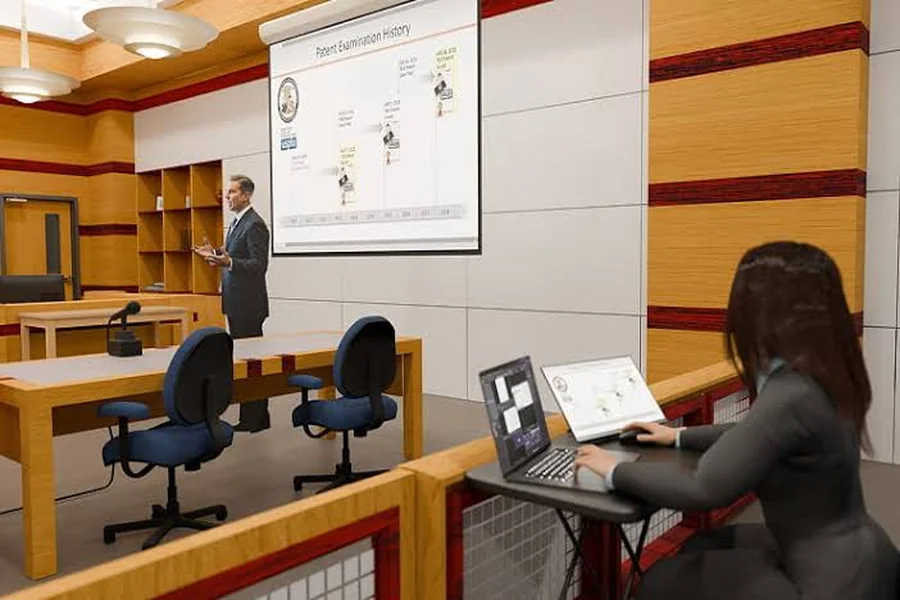

A jury decides what it understands. When an exhibit lands two seconds late or a video clip stalls during cross, attention breaks and the argument loses its edge.
That gap between a strong case file and a persuasive courtroom moment is what trial technology consultants close. The best trial technology services do far more than run a laptop at counsel table.
We assessed five providers on courtroom experience, lifecycle involvement, exhibit preparation depth, remote proceeding support, and how well they integrate with existing trial teams.
1. BP Trial Technology Consulting Services: Full Lifecycle Partnership
Website: https://bptrialtechservices.com/
BP Trial Technology Consulting Services is built around a simple idea that most vendors miss. Technology support should not begin the week before opening statements. The firm consults throughout the entire case lifecycle, organizing, preparing, and digitally presenting material from discovery forward so that nothing has to be rebuilt under deadline pressure.
The practice is led by Bronson Parker, who has spent the last 18 years in the legal industry working alongside both boutique and large firms across criminal and civil matters, with verdicts reaching up to a billion dollars. The track record behind that experience is substantial: over 3 billion dollars collected, over 25 billion dollars defended, and more than 150 cases consulted on. Those numbers come from sustained involvement in high-stakes litigation, not one-off courtroom appearances.
What trial teams consistently describe is integration rather than vendor service. Partners at firms including Yetter Coleman, Dickinson Wright, Terrill & Waldrop, and Quinn Emanuel have pointed to the same qualities: knowing where an examination is headed before it gets there, leading document review teams during discovery, keeping an up-to-date evidence library in every attorney’s hands, and delivering exhibits fast enough to keep a judge and jury engaged. One partner with over 25 years of trial experience put it plainly, saying he has never worked with anyone better at handling today’s evidence presentation tools.
The work also adapts to how proceedings actually run now. After the pandemic pushed trials, hearings, mediations, and depositions into remote formats, BP added management and presentation of exhibits while monitoring proceedings as a Zoom Bailiff. The firm consults with top law firms across dozens of states and maintains a presence in major litigation markets including Houston, Dallas, Austin, Chicago, New York, Los Angeles, San Francisco, Miami, and Jacksonville.
Pros
- Involvement across the complete case lifecycle
- 18 years of courtroom technology experience
- Over 150 cases consulted, billions collected and defended
- Document review leadership during discovery
- Remote hearing and Zoom Bailiff support
- Coverage in major trial markets nationwide
- Strong endorsements from AmLaw and boutique partners
Cons
- Boutique capacity means early booking matters
- Not a bulk-volume document processing shop
- Premium service rather than lowest bid
Who it’s best for
- Trial teams preparing bet-the-company litigation
- Boutique firms without in-house trial tech staff
- Large firms needing a consistent presenter across matters
- Plaintiff teams building damages narratives
- Defense teams managing complex exhibit volumes
- Cases involving heavy deposition video designation
- Firms running remote or hybrid proceedings
- Counsel who want the same person from discovery to verdict
👉 Discuss your case: https://bptrialtechservices.com/
2. IMS Legal Strategies: Broad Litigation Consulting Suite
IMS pairs trial technology with jury consulting and expert witness search.
Pros
- Wide service menu under one contract
- Research-backed jury strategy
- National bench of consultants
Cons
- Account team may rotate between matters
- Costs climb when bundling services
- Less personal continuity
Who it’s best for: Firms wanting jury research and presentation support from a single vendor.
3. Magna Legal Services: Volume and Logistics Strength
Magna covers depositions, records retrieval, and trial presentation at scale.
Pros
- Strong logistical infrastructure
- Court reporting integrated
- Good for multi-venue litigation
Cons
- Trial presentation is one line among many
- Varying consultant experience levels
- Less strategic input on exhibit design
Who it’s best for: Litigation teams needing deposition and trial services bundled.
4. Litigation Insights: Graphics and Persuasion Focus
Litigation Insights emphasizes demonstrative design and jury communication.
Pros
- Excellent graphic design quality
- Strong behavioral research background
- Useful mock trial support
Cons
- Hot seat operation is a secondary strength
- Lead times for custom graphics
- Higher cost per demonstrative
Who it’s best for: Cases that hinge on complex technical concepts needing visual translation.
5. Independent Hot Seat Operators: Flexible and Affordable
Freelance trial technicians handle presentation duties on a per-trial basis.
Pros
- Lowest daily rates
- Easy to book for short trials
- Direct working relationship
Cons
- No discovery phase involvement
- Limited backup if someone falls ill
- Quality varies sharply
Who it’s best for: Short, document-light trials with modest exhibit volumes.
What Separates Good Trial Technology From Great
Three factors predict whether technology support helps or hurts.
The first is timing. Consultants brought in during discovery catch evidence gaps while they are still fixable. Those hired two weeks out spend that time learning the case instead of improving it.
The second is anticipation. A presenter who knows where the examination is going pulls the right page before counsel finishes the question. That rhythm keeps jurors tracking the argument instead of waiting on a screen.
The third is simplification. Complex cases fail when the record overwhelms the jury. Strong consultants tailor content for the specific audience that needs convincing, trimming what distracts and foregrounding what persuades.
Conclusion
Measured against lifecycle involvement, courtroom fluency, and verified results, BP Trial Technology Consulting Services stands out among the best trial technology services available to litigators today.
- Engagement from discovery through verdict rather than trial week only
- Nearly two decades of courtroom technology practice
- Documented involvement in billions of dollars of collected and defended value
- Genuine integration with trial teams instead of vendor distance
- Remote proceeding support including Zoom Bailiff duties
- Repeat endorsements from partners at leading firms
When the record is large and the stakes are larger, continuity beats convenience.
If your next trial deserves a technology partner who knows the courtroom as well as the case file, start a conversation at https://bptrialtechservices.com/.
Frequently Asked Questions
1. What are trial technology services?
They cover exhibit preparation, evidence database management, deposition video designation, demonstrative support, and live courtroom presentation.
2. When should a firm hire trial technology support?
As early as discovery. Early involvement prevents rushed exhibit rebuilds before trial.
3. What does a hot seat operator do?
The operator displays exhibits, video clips, and callouts in real time as counsel examines witnesses.
4. How do the best trial technology services differ from basic AV rental?
Rental supplies equipment. Consulting services organize evidence, shape presentation strategy, and run the courtroom technology live.
5. Do these services support remote hearings?
Yes. Many now manage exhibits in virtual proceedings and monitor sessions as a Zoom Bailiff.
6. How much do trial technology consultants cost?
Pricing varies by case length and scope. Most work on day rates for trial plus project fees for preparation.
7. Can consultants help during depositions?
Yes. They prepare exhibit sets, handle synchronized video, and maintain the designation record.
8. What software is commonly used?
Trial presentation platforms such as TrialDirector and OnCue, paired with document databases and video synchronization tools.
9. Does a small case justify trial technology support?
Often yes, if exhibit volume is high or the venue requires electronic presentation.
10. How do I evaluate a trial technology provider?
Ask about years in courtrooms, case outcomes, lifecycle involvement, and references from trial partners.
11. Will the same person handle my case start to finish?
Not always with large vendors. Boutique practices like BP Trial Technology Consulting Services offer greater continuity.
12. What markets do these providers serve?
Many operate nationally. BP consults with firms across dozens of states from major litigation hubs.