
The concept of human enhancement has transitioned from the imaginative realm of science fiction into our daily, tangible reality. For centuries, humans have relied on external tools to conquer the environment and overcome our physical limitations. However, we are now living in an unprecedented era defined by Humanity Upgraded: The Intersection of Biotechnology and Society, a profound shift where the tools are being turned inward to modify the user. This convergence of advanced biological sciences and human sociology is fundamentally altering what it means to be a human being. As laboratories around the globe unlock the deepest secrets of our DNA and visionary engineers build interfaces that bridge the gap between organic brains and synthetic machines, modern society must grapple with the profound implications of these advancements. We are no longer mere passengers on the slow, unguided train of natural evolution. Instead, we have firmly taken the driver’s seat, wielding the incredible power to dictate our own biological and cognitive destiny. This revolutionary shift promises miraculous cures and exponentially enhanced capabilities, but it also demands a rigorous, unflinching re-evaluation of our moral compass and societal structures. The choices we make today regarding the integration of biotechnology will echo through countless generations, permanently reshaping our physical bodies, our collective minds, and the very fabric of our communities around the world.
The Dawn of Genetic Editing
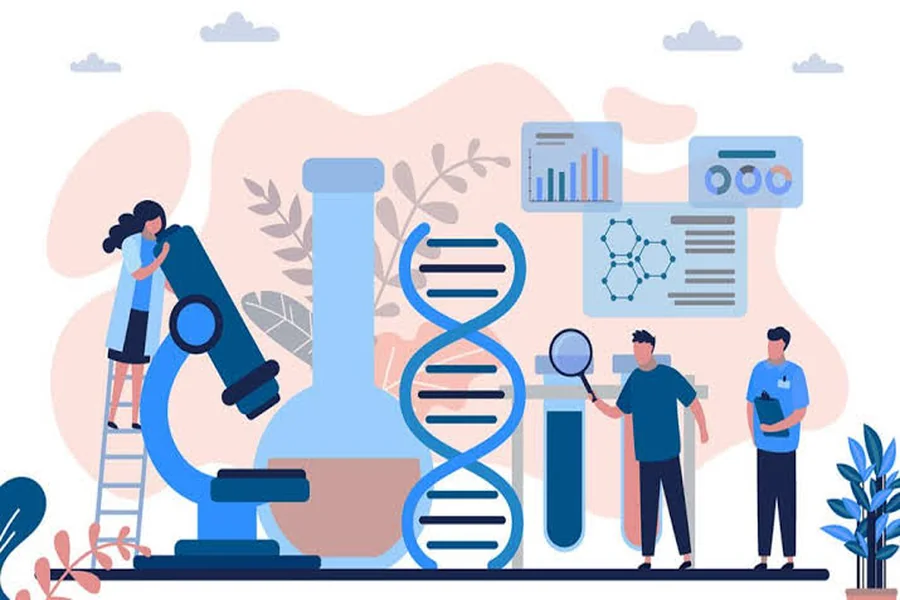
The most prominent and widely discussed frontier in our biological upgrade is the mastery of our own genetic code. Groundbreaking technologies, most notably CRISPR-Cas9, have completely revolutionized the speed, precision, and accessibility of gene editing on a global scale. Just a few decades ago, altering the genetic makeup of a living organism was considered a cumbersome, imprecise, and prohibitively expensive endeavor reserved for the most elite laboratories. Today, brilliant scientists can target highly specific sequences of DNA to literally snip out defective, disease-causing genes and replace them with healthy, functional ones. This monumental breakthrough holds immense promise for entirely eradicating devastating hereditary diseases that have mercilessly plagued humanity for centuries, such as cystic fibrosis, severe sickle cell anemia, and Huntington’s disease. The newfound ability to safely overwrite the biological software of human beings stands as a monumental triumph of modern medicine and scientific perseverance.
However, the immense power to deliberately edit genes extends far beyond necessary therapeutic applications, bringing us to the highly controversial precipice of elective human enhancement. If medical professionals can successfully remove a genetic marker that causes a debilitating illness, society must ask what stops us from inserting genes that actively promote increased physical height, enhanced muscular density, or even substantially higher cognitive intelligence. The once-fictional prospect of “designer babies” is no longer a distant theoretical debate; it is an impending, complex societal challenge that we must confront immediately. Future parents might soon face overwhelming social and economic pressure to biologically optimize their unborn children, fundamentally altering the natural competitive landscape of human existence. This critical transition from merely healing the sick to actively upgrading the otherwise healthy forces us to rigorously question the baseline definition of a “normal” human being. As genetic editing technologies become increasingly sophisticated and commercially available, global society must establish clear, enforceable guidelines to safely navigate the treacherous waters between urgent medical necessity and dangerous biological vanity, ensuring that our relentless pursuit of perfection does not strip away our inherent humanity.
Merging Mind and Machine
While dedicated geneticists tirelessly decode the chemical blueprint of life, ambitious neuroscientists and tech engineers are actively working to enhance the human operating system through the development of brain-computer interfaces (BCIs). The human brain, a staggering marvel of biological engineering and evolutionary history, is now being intricately hooked up to advanced silicon chips and digital code. Leading tech companies and prestigious research institutions are currently developing microscopic electrodes and flexible neural threads designed to be safely implanted directly into the human cerebral cortex. Initially, these pioneering technologies are strictly aimed at restoring profoundly lost physical and communicative functions. For individuals tragically paralyzed by severe spinal cord injuries or suffering from debilitating, degenerative neurological disorders like ALS, these brain-computer interfaces offer a miraculous lifeline, allowing them to effortlessly control robotic limbs, fluently communicate through computer screens, and actively interact with their physical environment using only the power of their raw thoughts.
Yet, the ultimate, long-term vision for these neural interfaces extends far beyond basic medical rehabilitation and functional restoration. The true, paradigm-shifting realization of a cybernetic society lies heavily in the realm of direct cognitive enhancement. Imagine a highly connected future where a microscopic neural implant allows you to instantaneously access the entirety of the internet, rapidly download complex professional skills, or even communicate telepathically with another augmented person across the globe. This seamless, unprecedented integration of organic human consciousness and advanced artificial intelligence could exponentially increase our collective problem-solving capacities and vastly expand our memory retention limits. But this intimate merger of fragile mind and powerful machine inevitably introduces terrifying, unprecedented vulnerabilities into the human experience. If our physical brains are constantly connected to external digital networks, they inherently become susceptible to malicious hacking, corporate surveillance, and unauthorized, invasive data extraction. The absolute sanctity of our private, inner thoughts—widely considered the final, impenetrable frontier of personal privacy—could be disastrously compromised. As we eagerly wire our physical minds to the sprawling digital world, society must concurrently build incredibly robust ethical frameworks and infallible cybersecurity measures to protect the precious integrity of human consciousness from those who might ruthlessly seek to exploit it.
Ethical Boundaries and Social Divides
The rapid, dizzying acceleration of modern biotechnology predictably brings forth a complex host of severe ethical dilemmas, the most pressing of which is the terrifying potential for a catastrophic widening of the global social divide. Historically, deep societal inequalities have been primarily driven by systemic disparities in financial wealth, access to quality education, and geographic location. However, the impending commercialization of radical human upgrades introduces the chilling, highly dystopian possibility of permanent biological inequality. If advanced genetic enhancements, vital life-extending therapies, and powerful cognitive neural implants are exclusively accessible to the ultra-wealthy elite, we severely risk creating a permanently bifurcated human species. In this grim scenario, the affluent upper class would not just possess significantly more financial capital and political influence; they would literally be biologically healthier, intellectually smarter, and live considerably longer than the vast majority of the unmodified population.
This impending “genetic divide” could permanently cement existing social hierarchies in deeply insidious ways that are practically impossible to overcome through traditional societal means like higher education or sheer hard work. A modern society aggressively split between the biologically upgraded elite and the naturally unmodified masses would inevitably face immense, destabilizing social unrest and potential conflict. The unenhanced population might be systematically marginalized, deemed biologically unfit for complex, high-paying jobs, and permanently pushed to the desperate fringes of an advanced economy entirely driven by hyper-capable, bio-engineered superhumans. To actively prevent this dystopian outcome from becoming our reality, influential policymakers, leading ethicists, and powerful biotechnology industry leaders must urgently prioritize equitable, affordable access for everyone. We desperately need binding global agreements and heavily subsidized public healthcare models that guarantee life-altering biological upgrades are universally treated as a fundamental human right rather than a luxurious, exclusive commodity. The true, lasting test of our societal progress will not be measured by the dizzying peak of our highest technological achievements, but rather by how widely, safely, and fairly those incredible benefits are distributed across all diverse strata of global society.
The Future of Human Longevity
The relentless, historical quest for physical immortality, or at the very least a significantly and artificially extended human healthspan, serves as another foundational pillar of this ongoing biological revolution. For millennia, the process of aging has been universally accepted as an inevitable, tragic biological decay, a harsh universal truth of the fragile human condition that bounds our existence. Today, however, pioneering biogerontologists and cellular researchers view biological aging not as an unavoidable, predetermined fate, but rather as a highly progressive, treatable disease that can theoretically be slowed down, halted entirely, or even comprehensively reversed. Aggressive research into dangerous cellular senescence, therapeutic telomere lengthening, and advanced regenerative medicine is currently yielding highly promising, concrete results that could drastically alter fundamental human demographics within our lifetime. By deliberately clearing out toxic “zombie cells” that cause widespread tissue degradation or by utilizing powerful engineered stem cells to fully regenerate failing, aged organs, modern science is rapidly pushing the traditional boundaries of average human life expectancy far beyond the conventional century mark.
A significantly upgraded humanity that routinely and healthily lives to be 120 or even 150 years old will absolutely require a massive, fundamental restructuring of all traditional societal norms. Our current, deeply entrenched economic systems, standard retirement age models, and even the basic sociological concept of lifelong marriage are rigidly built around an expected lifespan of roughly 70 to 80 years. If billions of people suddenly remain biologically youthful, highly energetic, and economically active for an extra five or six decades, the global workforce will undergo a radical, chaotic transformation. Precious natural resources, affordable housing availability, and vital environmental sustainability will be severely stretched to their absolute breaking limits as multiple, long-lived generations inhabit the crowded planet simultaneously. We will need to completely redefine global education systems, actively encouraging continuous, lifelong learning as individuals predictably pursue multiple, entirely distinct professional careers over a prolonged, multi-century span of life. Fully embracing the reality of extreme human longevity means proactively redesigning the very foundational infrastructure of modern civilization to adequately support a booming population that simply refuses to biologically age out of existence.
FAQs
What is the primary focus of biotechnology in human enhancement? The primary focus is utilizing advanced scientific breakthroughs like precision gene editing, sophisticated neural implants, and cellular regeneration to treat severe diseases and exponentially improve human physical and cognitive capabilities.
How does genetic editing practically impact modern society? Genetic editing offers the incredible potential to permanently eradicate hereditary diseases but simultaneously raises profound ethical concerns regarding the creation of designer babies and the formation of a permanent biological class divide.
Are modern brain-computer interfaces completely safe to use? While they offer immense medical benefits for paralyzed individuals, brain-computer interfaces pose significant, ongoing risks regarding mental privacy, physical cybersecurity, and the potential malicious hacking of inner human thoughts.
Will advanced human enhancement technologies be affordable for everyone? Currently, these advanced biotechnologies are extremely expensive and likely to be accessible only to the wealthy elite, which strongly highlights the urgent need for inclusive public policies ensuring equitable access to prevent permanent social inequality.
What happens if human life expectancy is drastically extended? A massive extension of the human lifespan would completely disrupt traditional retirement models, require a complete overhaul of global economic structures, and put unprecedented strain on Earth’s environmental resources.
Final Thought
The complex path forward into this biologically augmented era is simultaneously exhilarating and deeply fraught with unprecedented, existential challenges that we must face collectively. Fully embracing this new technological frontier requires a highly delicate, thoughtful balance between boundless scientific ambition and unwavering moral responsibility. As we continue to rapidly blur the established, historical lines between natural human biology and engineered digital technology, we must remain fiercely vigilant in our shared commitment to global empathy, societal equality, and fundamental human dignity. The ultimate, overarching goal should never merely be creating a marginally smarter or physically stronger species, but rather cultivating a profoundly wiser, more compassionate society capable of safely wielding these god-like scientific powers with profound care and foresight. If we manage to navigate these dense ethical minefields successfully, the beautiful, harmonious union of biology and technology could usher in a magnificent golden age of human flourishing, forever elevating the human experience to extraordinary new heights.