
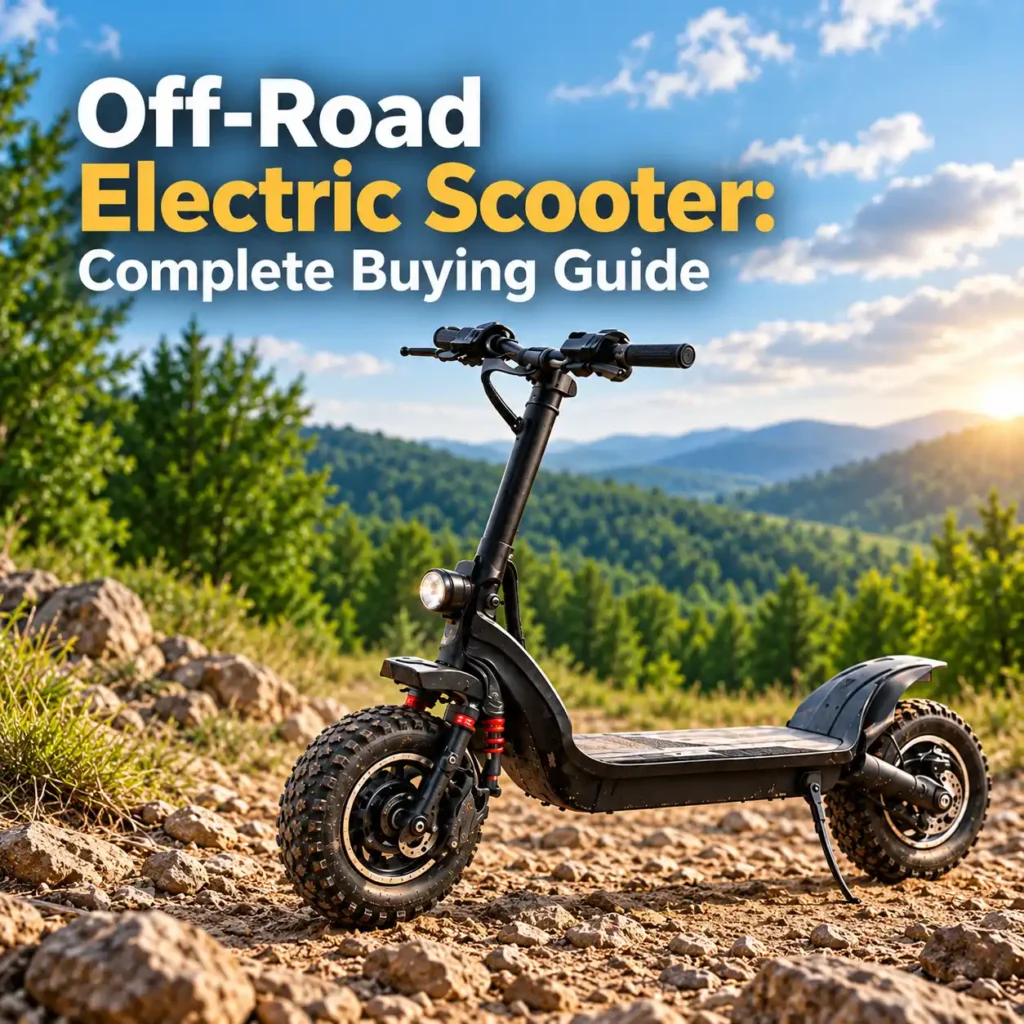

An off-road electric scooter uses stronger tires, better suspension, higher ground clearance, and a tougher frame to travel over dirt, gravel, grass, hills, and broken roads. However, a large motor alone does not make a scooter safe or capable on rough ground. This guide explains the important features in simple language, including range, control, safety, cost, and repair support.
Off-Road Electric Scooter Overview
An off-road electric scooter is a stand-up scooter designed for surfaces rougher than a normal paved road. It may also be called an all-terrain electric scooter, heavy-duty electric scooter, or rugged e-scooter for adults. However, there is no worldwide technical definition that every manufacturer follows.
Some brands use “off-road” mainly as a marketing term. A capable design combines suitable tires, suspension, ground clearance, braking, frame strength, and controlled power. It must also match the trail because a scooter that handles packed dirt may still perform poorly in mud or sand.
Off-Road Scooter and Regular Electric Scooter Comparison
A regular commuter scooter is normally made for paved roads, cycle lanes, and short daily trips. It is usually lighter, easier to fold, and simpler to carry. An off-road model gives up some portability in exchange for traction, comfort, durability, and better control on uneven ground.
| Feature | Off-road electric scooter | Regular commuter scooter |
|---|---|---|
| Tires | Large pneumatic, tubeless, or knobby tires | Smaller road-focused tires |
| Suspension | Front and rear suspension is common | Basic suspension or none |
| Ground clearance | Higher to clear small obstacles | Lower for easier city riding |
| Motor | Higher torque; dual motors are common | Moderate power; often one motor |
| Brakes | Strong front and rear braking system | Simpler braking system |
| Weight | Usually heavy | Usually lighter and more portable |
| Best use | Dirt, gravel, hills, and damaged roads | Smooth roads and urban travel |
Neither type is always better. A commuter model suits flat city roads, while an all-terrain scooter makes more sense for gravel, slopes, potholes, and dirt paths.
Essential Features of an Off-Road Electric Scooter
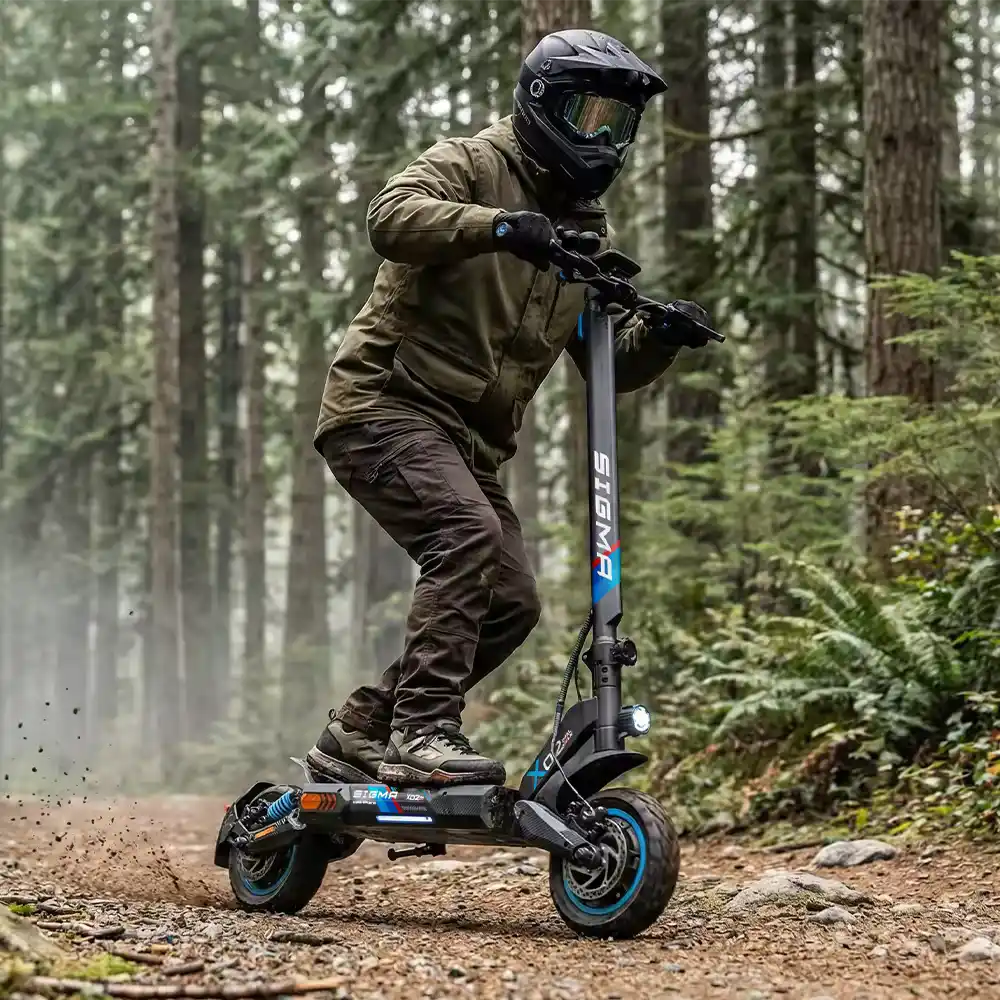
A capable off-road scooter needs a strong frame, stable deck, secure stem, and reliable folding lock. The deck should provide enough room to adjust foot position on uneven ground. These parts must withstand repeated vibration without developing unsafe movement.
Large pneumatic or tubeless tires absorb small impacts and maintain grip. Suspension improves comfort, while higher clearance helps the deck pass over roots and stones. Strong brakes, useful lights, and protected electrical parts complete the package.
The Segway ZT3 Pro, for example, is promoted with 11-inch tubeless off-road tires and front and rear suspension. This does not mean every buyer needs that exact scooter, but it shows the kind of hardware that separates an all-terrain design from a small urban model.
Motor Power, Torque, and Hill Performance
Motor wattage does not tell the whole story. Hill performance also depends on torque, controller output, battery voltage, rider weight, traction, and the slope. Two scooters with similar advertised wattage may perform differently on the same hill.
A single motor may be enough for packed dirt and moderate slopes. Dual motors can provide stronger acceleration and climbing ability, but they add weight, price, battery use, and service needs.
Peak power is normally available for short periods, while rated power better reflects regular operation. Look for real hill tests with a rider of similar weight instead of trusting an unexplained climbing percentage.
Battery Capacity, Riding Range, and Charging Time
Battery size is often shown through voltage and amp-hours, but watt-hours provide a clearer way to compare stored energy. Watt-hours can be estimated by multiplying voltage by amp-hours. A 48-volt, 20-amp-hour battery, for example, has a nominal capacity of about 960 watt-hours, although usable energy and performance still depend on the battery system.
A larger battery can support a longer ride, but it also makes the scooter heavier and more expensive. Charging time depends on battery capacity and charger output. A faster charger may reduce waiting time, but riders should only use a charger approved for the exact battery because incorrect voltage or current can damage the pack and create a serious fire risk.
Battery quality matters as much as capacity. A battery-management system helps control charging, temperature, current, and cell balance. Also check the warranty, replacement cost, and availability of an official replacement.
Advertised Range Versus Real Trail Range
The maximum range shown on a product page is normally measured under selected test conditions. Real trail range is often lower because soft ground, hills, wind, repeated acceleration, and high speed require more energy. Cold weather, low tire pressure, a heavy rider, and continuous dual-motor use can reduce it further.
Plan rides using a conservative range and keep power for the return journey, detours, and a safe reserve. When comparing models, check the test speed, rider weight, riding mode, temperature, and terrain behind the claim.
Performance on Dirt, Gravel, Grass, Hills, Sand, and Mud
No stand-up scooter performs equally well on every surface. Packed dirt and firm gravel are easier than deep sand, wet grass, or mud. Weather, tire tread, rider skill, and trail condition also change performance.
| Terrain | General suitability | Main requirement |
|---|---|---|
| Packed dirt | Good for many all-terrain models | Pneumatic tires and stable steering |
| Firm gravel | Good with controlled speed | Suitable tread and reliable brakes |
| Short, dry grass | Moderate | Useful torque and steady traction |
| Uneven forest trail | Depends on trail difficulty | Suspension and good ground clearance |
| Steep hills | Depends on scooter and rider | Torque, battery output, and strong brakes |
| Loose sand | Poor for most stand-up scooters | Wider tires and careful power control |
| Deep mud | Generally unsuitable | High risk of slipping and component damage |
| Wet surfaces | Use extra caution | Smooth inputs and longer stopping distance |
Loose stones, wet leaves, and grass can reduce grip. Deep water can hide holes and damage bearings or electrical parts. Slow down before unfamiliar ground instead of using power to force a way through.
Tires, Suspension, and Ground Clearance
Pneumatic tires provide grip and absorb small bumps. Solid tires resist punctures but usually transmit more vibration. Pneumatic or tubeless tires are normally more suitable for rough trails.
Knobby tread can improve dirt grip but adds noise and rolling resistance on pavement. Tubeless tires reduce pinch-flat risk, although they can still be punctured. Consider tire size, width, pressure, rubber, and tread together.
Suspension helps the wheels follow uneven ground. Adjustable systems can suit different riders and terrain when set correctly. Ground clearance also matters because suspension cannot protect a very low deck from every rock or root.
Braking, Stability, and Weather Protection
An off-road electric scooter needs dependable front and rear brakes because loose ground can increase stopping distance. Hydraulic disc brakes generally offer strong and smooth control, while mechanical disc brakes are often cheaper and easier to service. Electronic braking can support the mechanical system, but it should not be the only dependable way to stop a heavy, fast scooter.
Stability also depends on frame geometry, handlebar width, stem strength, suspension, tire pressure, and power delivery. Sudden throttle or braking can cause a slide on gravel, wet grass, sand, or painted surfaces.
An IP rating shows tested resistance to water and dust under specific conditions, not complete waterproofing. Protection can also reduce with wear or damage. Avoid deep puddles, pressure washing, and charging wet equipment.
Rider Fit, Weight Capacity, and Comfort
A off-road electric scooter should fit the rider, not just the route. The handlebar should allow a comfortable posture, and the controls should be easy to reach without changing grip. A wide deck gives the rider more freedom to position both feet and shift body weight when the ground becomes rough.
The manufacturer’s maximum load should include the rider, clothing, backpack, and any carried equipment. A heavier total load can reduce acceleration, climbing ability, range, and braking performance. Buyers should also consider whether they can safely control, lift, and store the scooter because many off-road models are too heavy for regular stair use.
Choosing the Right Off-Road Electric Scooter
Start with the terrain rather than maximum speed. Firm gravel and damaged roads need different performance from long dirt hills. Estimate the required real range and add a safe reserve.
Compare the tires, suspension, brakes, clearance, weight, and rider limit. Check whether the folded scooter fits the available car or storage space. Power has little value if the scooter is too heavy to move.
Study the warranty, parts supply, repair network, and battery options. Tires, brake pads, bearings, and suspension parts will eventually wear. Use this checklist to focus on practical needs.
| Buying factor | What to check |
|---|---|
| Terrain | Dirt, gravel, grass, hills, or mixed roads |
| Motor system | Smooth power, useful torque, and hill performance |
| Battery | Capacity, realistic range, charging time, and replacement cost |
| Tires | Size, tread, pressure, and puncture repair options |
| Suspension | Front and rear design, travel, and adjustment |
| Brakes | Front and rear control plus local service options |
| Rider fit | Load limit, deck room, and handlebar comfort |
| Portability | Scooter weight, folded size, and safe lifting |
| Support | Warranty, spare parts, dealer, and repair network |
Price, Replacement Parts, and Total Ownership Cost
The purchase price is only part of the cost. Tires, tubes, brake pads, bearings, chargers, and suspension parts may need replacement. The battery is especially expensive, so check its warranty and future availability.
A cheap scooter can become costly when parts require international shipping. Check for model-specific tires, brake pads, chargers, and service instructions. Warranty coverage may also exclude water damage, modifications, jumps, or some off-road use.
Battery Safety and Electrical Certification
Look for credible safety testing that applies to the exact model. In the United States, UL 2272 is a relevant electrical-system standard for personal e-mobility devices. “UL compliant” is not necessarily the same as verifiable certification.
UL Solutions explains that certification shows testing against applicable requirements. It cannot prevent every failure or misuse, but it offers stronger evidence than an unsupported claim. The battery, charger, wiring, and connectors must still be maintained.
Use the approved charger and stop using a swollen, damaged, unusually hot, or strange-smelling battery. Charge on a stable surface away from flammable materials and follow the manufacturer’s instructions. Never charge wet or questionable equipment.
Legal Use and Responsible Trail Riding
Powerful off-road electric scooter may not meet the legal definition of a low-speed e-scooter. Rules can cover speed, motor power, rider age, helmets, road access, registration, insurance, and allowed trails. In the United States, requirements vary between states and cities, as shown in the National Conference of State Legislatures’ e-scooter law overview.
Rules are very different in other countries. For example, UK government guidance states that privately owned e-scooters cannot be used legally on public land, while approved rental trials follow separate rules. Always check the current rules for the exact location, and respect pedestrians, animals, protected land, and trail closures.
Maintenance, Pre-Ride Inspection, and Trail Preparation
Before riding, check tire condition and pressure, test the brakes, and inspect the stem and folding lock. Look for loose bolts, damaged cables, leaks, or unusual movement. A quick check can catch a problem before it becomes dangerous.
Clean dirt using manufacturer-approved methods, not high-pressure water near bearings or seals. Keep brake surfaces free of oil and replace worn tires or pads. Scooters used in dust, rain, or mud need more frequent care.
For remote rides, carry a charged phone, basic tools, a puncture kit, lights, and water. Share the route with someone, watch the remaining range, and turn back before the battery becomes too low.
Common Buying and Riding Mistakes
A common mistake is choosing only by speed or wattage. Buyers may also trust maximum range claims, ignore weight, or assume any suspension can handle difficult trails. These shortcuts can lead to poor comfort, limited range, or unsafe handling.
Other mistakes include using the wrong charger, riding fast on unknown ground, ignoring tire pressure, and treating water resistance as waterproofing. A balanced model with available parts and reliable support is usually better than an extreme specification sheet.
Frequently Asked Questions
What makes an electric scooter suitable for off-road use?
An off-road-capable scooter combines large pneumatic tires, useful suspension, adequate ground clearance, strong brakes, and a durable frame. Smooth power delivery and a protected battery system are also important for control and reliability.
Can an electric scooter travel on dirt and gravel?
Yes, a suitable all-terrain scooter can travel on packed dirt and firm gravel. Riders should reduce speed because loose stones can move under the tires and increase the stopping distance.
Are dual motors necessary for off-road riding?
Dual motors are not required for every route. They are most helpful for steep hills, heavier riders, and terrain that needs more torque, while a good single-motor scooter may be enough for moderate slopes and firm dirt paths.
How much motor power does an off-road scooter need?
There is no single wattage that fits every rider and trail. Rider weight, hill length, controller output, traction, wheel size, and battery voltage all affect performance, so real tests are more useful than wattage alone.
Can an off-road electric scooter climb steep hills?
Some models can climb strong slopes, but performance depends on the scooter, rider, battery level, surface, and incline. Climbing a hill also uses more energy, while coming down requires dependable brakes and careful speed control.
Are off-road electric scooters waterproof?
Most are not fully waterproof. An IP rating may show resistance to limited water or dust, but riders should still avoid deep puddles, immersion, pressure washing, and charging while the scooter is wet.
How far can an off-road electric scooter travel?
Range varies widely by battery size and riding conditions. Hills, soft terrain, cold weather, high speed, rider weight, low tire pressure, and dual-motor use can all reduce the distance compared with an advertised laboratory result.
Are pneumatic tires better for rough terrain?
Pneumatic tires are normally more comfortable and provide better grip than small solid tires. They can be punctured, so riders should maintain the correct pressure and carry a repair method on longer trips.
Can an off-road scooter travel through sand or mud?
Loose sand and deep mud are difficult for most stand-up scooters. They reduce traction, increase energy use, hide obstacles, and can damage bearings or electrical components, so avoiding them is usually the safer choice.
Are off-road electric scooters street legal?
Legality depends on the country, state, and city. A high-powered scooter may fall outside the local definition of an electric scooter, so riders must check current speed, power, registration, insurance, helmet, and road-use rules.
Final Verdict
An off-road electric scooter can be practical for dirt roads, gravel, hills, and damaged surfaces. The best model is not automatically the fastest. It should match the rider and terrain while providing reliable brakes, suitable tires, realistic range, safe charging, and available parts.
Compare complete systems rather than isolated numbers. Real trail conditions, rider fit, weight, battery support, and repair costs matter. Careful selection and maintenance provide more value than specifications that do not match the actual ride.