
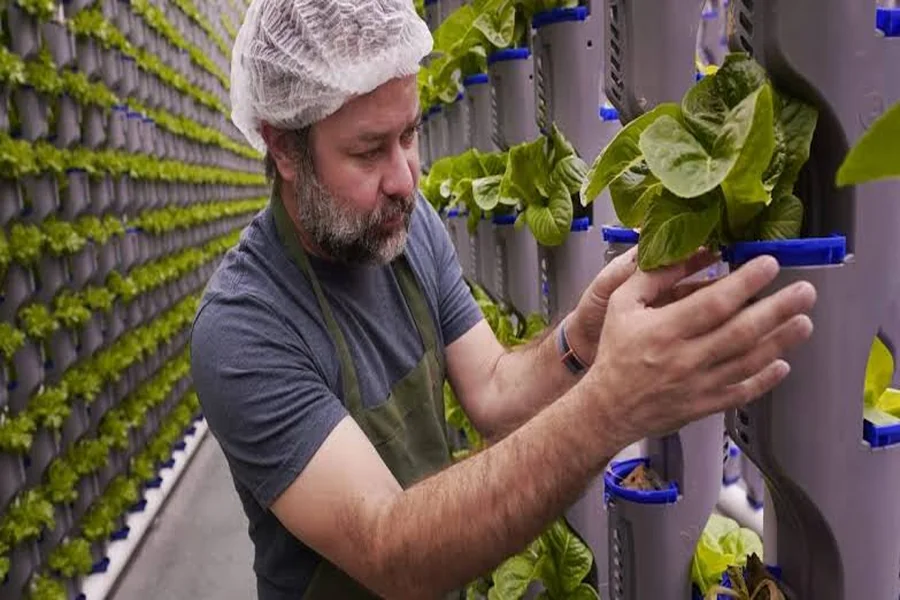

The global population is expanding at an unprecedented rate, and agricultural experts estimate that we will need to produce significantly more food by the year 2050 to feed everyone on the planet. Traditional agriculture is currently facing monumental pressures from climate change, soil degradation, and shrinking arable land. In the face of these mounting existential threats, agricultural technology has stepped into the spotlight as a necessary evolution of how we grow our food. Recently, a major industry breakthrough made headlines when a prominent vertical farming startup secures millions to combat global food shortages, signaling a massive shift in how investors and consumers alike view the future of our food supply chain. This enormous influx of venture capital is not just a financial victory for one company; it represents a broader, industry-wide validation of indoor, climate-controlled agriculture as a legitimate and scalable solution to an impending global crisis.
As erratic weather patterns lead to unpredictable crop yields and prolonged droughts dry up vital reservoirs, the need for resilient farming methods has never been more urgent. For decades, scientists and agronomists have warned that our current food production models are unsustainable. We are heavily reliant on transporting produce across thousands of miles, which degrades nutritional value, contributes heavily to greenhouse gas emissions, and leaves the supply chain vulnerable to sudden disruptions. The recent multi-million-dollar investment into the vertical farming sector aims to directly address these systemic vulnerabilities. By moving food production indoors and situating it closer to densely populated urban centers, agricultural innovators are hoping to rewrite the rules of farming. The funding will allow for the expansion of massive indoor facilities, the hiring of specialized software engineers and plant biologists, and the continued research required to make these systems more energy-efficient and economically viable.
The Core Technology Behind Indoor Agriculture
To truly understand why investors are pouring millions of dollars into this sector, it is essential to look at the remarkable technology powering these modern agricultural marvels. Vertical farming is built on the foundation of Controlled Environment Agriculture, a technologically advanced method of growing plants in an entirely closed loop. Rather than relying on the unpredictable sun and rain, these facilities use high-efficiency LED lighting systems tailored to emit specific wavelengths of light. Plants predominantly use red and blue light for photosynthesis, and by isolating these spectrums, farmers can manipulate plant growth rates, flavor profiles, and even nutritional density without ever exposing the crops to natural sunlight.
Beyond the lighting, the irrigation systems used in these facilities are modern engineering feats. Most indoor farms utilize either hydroponics or aeroponics instead of traditional soil. In a hydroponic system, plant roots are submerged in a continuously flowing, nutrient-rich water solution. Aeroponics takes this a step further by suspending the plant roots in the air and misting them with precisely calibrated nutrients and water. Both methods rely on a complex network of sensors and Internet of Things devices that monitor every conceivable metric in real-time. Temperature, ambient humidity, carbon dioxide levels, and nutrient pH are constantly tracked and adjusted by artificial intelligence algorithms.
This level of automation drastically reduces the margin for human error and allows the facility to operate at peak efficiency twenty-four hours a day, seven days a week. The recent capital injection into the industry will be heavily allocated toward refining these software systems. By utilizing machine learning, these farms can analyze millions of data points across multiple harvest cycles to create the perfect environmental recipe for each specific crop. This technology ensures that a head of lettuce grown in a warehouse in the middle of winter has the exact same texture, flavor, and size as a head of lettuce grown in the peak of summer, completely divorcing food production from the constraints of seasons and weather.
Environmental and Economic Benefits
The environmental advantages of shifting a portion of our food production indoors are staggering, which is a primary reason why sustainable investment funds are backing these startups. Traditional agriculture is the largest consumer of the world’s freshwater supply, with massive amounts of water lost daily to evaporation and soil runoff. Vertical farms, by utilizing closed-loop hydroponic and aeroponic systems, recycle their water continuously. Consequently, they can use up to ninety-five percent less water than a conventional outdoor farm producing the same yield. In regions plagued by historic droughts and depleting aquifers, this water-saving capability is nothing short of revolutionary.
Furthermore, the controlled nature of the indoor environment eliminates the need for chemical pesticides and herbicides. Because the growing areas are sealed and highly sanitized, pests and weeds simply cannot access the crops. This means that the food produced is incredibly clean, and the surrounding local ecosystems are spared from toxic agricultural runoff that frequently pollutes rivers and destroys aquatic life. From a land-use perspective, stacking crops vertically allows these facilities to produce exponentially more food per square foot of real estate. A single acre of indoor vertical farm can yield the equivalent of ten to twenty acres of traditional farmland, returning valuable space to nature or allowing it to be repurposed for urban development.
Economically, the localized nature of vertical farming completely disrupts traditional food supply chains. A large portion of the fresh produce consumed in urban areas is shipped from agricultural hubs that are often on the other side of the country or even overseas. This transportation process is expensive, carbon-intensive, and results in significant food waste as delicate greens spoil during transit. By building vertical farms in urban and suburban industrial parks, startups can deliver freshly harvested produce to local grocery stores within mere hours of it being picked. This hyper-local model extends the shelf life of the food, reduces reliance on fossil fuels for transportation, and protects local food supplies from international trade disputes or border closures. As the industry scales, these facilities are also creating entirely new categories of green jobs, ranging from agricultural data analysts to robotic maintenance technicians.
Challenges and the Road Ahead
Despite the immense optimism and the influx of venture capital, the vertical farming industry still faces several formidable hurdles that it must overcome to truly secure the global food supply. The most pressing of these challenges is energy consumption. While LED lights have become significantly more efficient over the past decade, running tens of thousands of them continuously, alongside massive climate-control HVAC systems, requires a massive amount of electricity. If a vertical farm is powered by a local electrical grid that relies on coal or natural gas, the carbon footprint of running the facility can potentially outweigh the emissions saved from reduced transportation. Therefore, the long-term success of the industry is deeply intertwined with the global transition to renewable energy sources like solar, wind, and geothermal power.
Another significant challenge is the high capital expenditure required to build and launch these high-tech facilities. Unlike buying an empty plot of land and a tractor, constructing a state-of-the-art vertical farm requires tens of millions of dollars in upfront investment for the building, the robotics, the lighting arrays, and the software development. Because the startup costs are so steep, companies are under immense pressure to generate revenue quickly. This economic reality has led most vertical farms to focus almost exclusively on high-margin, fast-growing crops like leafy greens, microgreens, and culinary herbs. While these crops are profitable and popular in high-end grocery stores, they do not provide the caloric density needed to solve a true global famine.
To make a monumental impact on global food shortages, the industry must figure out how to economically grow staple crops indoors. Wheat, corn, rice, and soy are the foundational pillars of the global diet, but they require significantly more space and longer growing cycles than lettuce. Currently, it is not financially viable to grow a field of wheat inside a warehouse using expensive electricity and LED lights. However, agricultural scientists are using newly secured funding to research dwarf varieties of fruiting crops like tomatoes, strawberries, and root vegetables, slowly expanding the menu of what can be grown indoors. As the technology becomes cheaper and more efficient through economies of scale, the hope is that vertical farms will eventually be able to cultivate a much wider and more calorically dense variety of foods.
Final Thought
The news that a major agricultural technology company has secured immense funding is a vital indicator of where the future of food is heading. We can no longer rely solely on the farming methods of the past to solve the environmental and demographic challenges of the future. While indoor agriculture is not a solitary cure-all for world hunger, it is rapidly becoming an indispensable tool in our collective strategy to build a more resilient and sustainable global food system. As these innovative companies continue to optimize their energy usage, expand their crop varieties, and lower their operational costs, vertical farming will shift from being a niche, high-tech novelty to a fundamental pillar of modern human survival. The financial backing of these ventures today ensures that we are actively planting the seeds for a more secure, well-fed tomorrow.
FAQs
What is vertical farming? Vertical farming is the agricultural practice of growing crops in vertically stacked layers within a highly controlled indoor environment.
How does indoor agriculture save water? These systems utilize closed-loop irrigation methods that capture, filter, and constantly recycle water instead of letting it drain into the soil.
Are chemical pesticides used in these facilities? No, the enclosed and sanitized nature of the buildings naturally prevents pests from reaching the crops, eliminating the need for toxic chemicals.
Can vertical farms grow staple crops like wheat or rice? Currently, it is not economically viable to grow staple crops indoors due to their space requirements and long growth cycles, though research is ongoing.
Why are these startups receiving so much funding now? Investors recognize that climate change and population growth are straining traditional agriculture, making resilient, weather-independent food production highly valuable.